You are on S.O.U.L.MAG, the review of the night by S.O.U.L. Montréal. This is a text by Costa, “The Dancer”, about an experience lived on the dance floor. If you were there, or if you have something to tell us about it, share it with us in S.O.U.L.MEMORY, below.
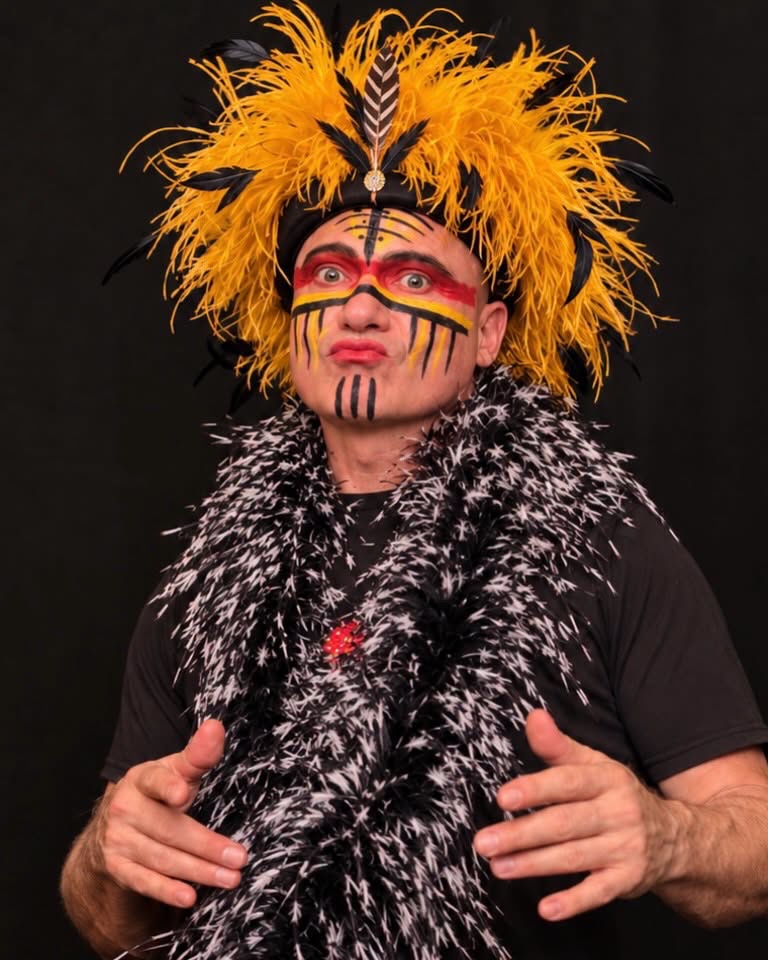
Deep Dancing Study: trance-in-dance, with Danny Tenaglia
Stereo — 261031 — Danny Tenaglia
Danny Tenaglia — SCAREO, Stereo, October 31, 2026
Were you there?
What a marathon!
It starts with the beams, or the bursts of the light beams, piercing the night, piercing the absence to light up the void and the space until they touch a surface.
For me, this night was defined by musical content of great perfection, but wrapped in absolutely breathtaking light, extremely locked in, extremely in phase with the music, to showcase the dancer’s whole sensory experience, first and foremost.
The light carried us to the deepest part of what each track could give, gathering all the senses, visual, sensory, auditory, in one same region of the brain, where everything was perfectly aligned, with no zone of tension or stress.
The very deep blues, the bursts that light us up, the reds in the moments of build-up, the brilliant colours when they’re needed, the blacks, the absolute blues… The light appearing every time at the right moment, when the music takes a rest and the dancers can see each other’s faces again.
It was all so perfect that it’s as if we didn’t even realize everything was perfect, so natural did this symbiosis seem.
You know? Those moments when everything seems to work so well that you almost stop telling apart the elements that make up the experience? You MELT into the whole... Into the SOUND, the BEAT, the movement, the light...
My god, if that isn’t happiness...
When everything is perfect, I often tell myself that the lighting designer works at least as hard as the DJ! Because YES, the DJ carries us away with music, but the light guy has to follow the whole sequence by improvising, without ever really knowing where the other one is going.
That’s where his work takes on its full value, when it’s this well done. Because the depth of the music is something we also live through all our senses: it takes a hell of a precision to express and shape light so as to showcase the music to that point.
Because, in the end, all this visual architecture accompanies an experience that happens first inside the dancer, doesn’t it?
THE MUSIC THAT DIDN’T EXIST
As for the music itself: My God!
The extraordinary alternation this DJ can have, in his immense encyclopedic knowledge of everything that exists, of every style, of all those emotions, his past, his life, his sufferings, his loves, his music... His expressions! It has no equal. This man LOVES what he does.
He can take us through two, three or four tracks in one style. Then he changes, he goes somewhere else a little, he moves to something more techno by raising the BPM, then he slows us down again and brings us disco. I had actually done a big analysis of this in this article (Stereo’s 25 years: sixteen hours of trance).
It’s an extraordinary journey through eras and memories, but also toward something that doesn’t exist, except in his own head.
I also thought I noticed that Danny Tenaglia wasn’t using turntables as such. In fact, he was playing with loops of every kind, stretching them immensely, making us hear what we believe to be the coming tracks drawn from the past, but no...
His genius lies notably in this immense knowledge of the history of music, which lets him play with our memories and our expectations, and play with us with such ease.
I mention this to underline that the music we were hearing, in fact, didn’t exist.
That is to say, for a large part of the segments he had us listen to, they weren’t songs as such. They were blocks he arranged and triggered at will, with his magic controller, with breathtaking presence, using structural loops…
Of course there are complete tracks like the ones he had us discover (like the old version of “THRILLER” by Michael Jackson, just sick!) but often, they were pure live reinventions.
It was actually my friend Dean Taylor who pointed it out to me: “Pay attention, Chris, it’s probably because he’s in marathon mode, but the tracks he’s playing last 12 to 15 minutes, it’s incredible!”
And YES! So much!
What he had us live tonight was very dense as a musical type.
His absolute mastery of styles lets him take us wherever he wishes, turning the music itself into a material. A sculptable material, with which he builds mental and musical structures to which we can surrender our bodies and our minds.
And it’s precisely this last observation that brings me to the real subject of my reflection.
DEEP DANCING OR DEEP MOVING?
Since that night of Oct 31, 2026 for SCAREO, I have been trying to better define what we could describe as “Deep Dancing”, or perhaps “Deep Moving”, terms that crossed my mind while dancing.
To paint the picture, you’ll agree with me that a good DJ never loses the dancer’s thread, and dancers always have something to hold on to so they can move, so they can stay in “the flow”.
You know, those moments of “trance-in-dance”, deep dancing, when you dive “into the beat”, when you eat the floor... with a type of music that carries us completely into letting go of your worries, into that state of the present moment, when the body can let go entirely, lose itself in movement...
It’s not simply about loving a piece of music, recognizing a rhythm or following a series of songs. What interests me is this ability of music to carry us into a state where we no longer necessarily need to think about each of our movements, because we can surrender to the structures being offered to us.
When I watch the way a DJ like Danny Tenaglia builds his set, I wonder to what extent this musical architecture contributes to that surrender. The changes of style, the loops that stretch out, the elements we recognize and the ones that surprise us can carry us into a movement that continues naturally, even when the music takes an unexpected direction.
This relationship between musical construction and the dancer’s movement fascinates me. It raises questions about how we perceive rhythm, anticipate musical transformations and respond with our bodies to what we hear. How far does this response remain conscious? And at what moment do we feel we are no longer directing our movements, but simply living them?
I’m not trying to impose a definition on this experience. I would rather know whether you recognize it and how you would describe it.
Because there may be, in these moments of surrender, something we share much more widely than we imagine.
HE MAKES THE MOMENT INTIMATE FOR EACH OF US
But what makes Stereo nights with Danny T so exceptional isn’t only the music. It’s all those moments of great intimacy, when the DJ takes the time to speak to his people, to pay tribute to the craftspeople, to his friends, to his fans. He teaches us about music, about his experiences; he gives us the story of the tracks he plays, the anecdotes and emotions that come with them. And through how personal and committed he shows himself to be, he makes the moment intimate for each of us.
That night, he paid tribute several times to Cevin Fisher, that great name of house music, who had died two days earlier, on October 29, at 63. Fisher is “The Freaks Come Out”, he is “(You Got Me) Burnin’ Up” with the voice of Loleatta Holloway… and it was Danny himself who, in the mid-90s, had pushed him to make his own music. They even signed “Move That Body” together. So when Danny talked to us about him, and played Fisher, with the tenderness and respect he gives to things, it wasn’t a tribute for the occasion: it was the history of house saluting one of its own.
He was extraordinarily human. He is a model of sharing, who probably makes many of his fans, many of his dancers, better humans. Simply.
And those people, precisely, came from everywhere. These nights allow extraordinary encounters with people from all over the world, who took a plane and organized their lives to experience this event with their Danny, whom they have known for years.
I was lucky enough to meet a group of friends of my friend Julius, two Americans and a Portuguese, who told me they had become friends 30 years ago, on the dance floor, for Danny.
They have followed each other all these years, since the great New York years of the club “Vinyl” (the legendary Manhattan club where Danny defined a whole era, in the late 90s and early 2000s), and from one great legendary club to another.
For thirty years, imagine…
Today, they are men and women on the other side of life, and they still follow this artist, they are still in each other’s lives, united by music.
Brought together by a DJ, memories, values, an identity…
Isn’t this the most beautiful representation of S.O.U.L.? The Spirit Of Underground Living?
So I ask the question: doesn’t Danny’s experience, through the emotional level it engages, become a large part of underground culture itself?
This DJ connects every era of the past to the present, in music as in relationships, with a level of friendship and love for his fans that belongs to him alone.
It takes very particular conditions for the greatest harmony to appear. With Danny T, no doubt: he creates that atmosphere. He sets up the conditions for the best in each of us to be expressed, and that is where this collective connection emerges, made of what each person lives for themselves.
WHAT BRINGS US TOGETHER
Another question, noted in the wake of that night, concerns intuitive dance and cultural differences.
How do humans dance on their own? What brings them together?
My scientific question: are there dance movements that come back naturally, at the most basic level? Exposed to the same music, how do we dance?
I would like to imagine a geocultural study that would observe how people from different cultures react freely to music, without choreography or any particular instruction. What movements would appear spontaneously?
What differences would we observe? And above all, would we find certain common reactions despite the diversity of cultures and individual experiences?
I’ll tell you why I thought of this: over the weekend, I met a young guy in his twenties, Mexican, living in Montreal for 4 years, as well as a Tunisian woman… we started dancing together, and within 1 min, if not 30 seconds, we were all dancing to the same rhythm, with exactly the same intuitive movements, on the same rhythmic sequences, as if we had all been dancing together forever…
I a-fu-ckin-dore THAT when it does that!! It’s sick!
We had never seen each other in our lives, and in 1 min, we were brothers and sisters of dance born of the same mother… fabulous!
This would represent a universal factorization of the body’s expression following a tempo and musical phrases on the same tracks.
In other words: does this show that cultural groups can have absolutely nothing in common in how they interpret music through movement? Or on the contrary, that beyond cultures and separations, everything comes together where no one gives a code or an instruction manual?
This question naturally extends that of Deep Dancing. If music can carry us into movements we surrender to, it becomes interesting to understand what comes from our learning, from our personal history, or from bodily reactions we might share.
It also connects with that impression of collective connection we can sometimes feel on a dance floor. Each person remains in their personal experience, but all take part in a shared musical environment. The word egregore comes to mind to describe this feeling, without claiming that it alone is an explanation.
This tribe answers a deep need. In Maslow’s pyramid, belonging is a fundamental need, the first one that comes after survival and safety, because it holds an immense place in social construction.
Belonging to a group, a tribe, a family, friends, contributes to the psychological, spiritual and energetic well-being of most of the people who benefit from it.
And it is from this emotional experience, individual yet collective, that the legends of the night are built, along with the traditions that define us and, in the end, bring us together.
AN UNDERGROUND CULTURE THAT IS PASSED ON
From this comes a pride: that of belonging to a group and to a cultural identity that defines itself, of being from Montreal, of being part of the Stereo tribe and of “underground Montreal”.
Admit it, recognize that pride of finding yourself abroad, or simply on a dance floor, with people who, like you, share values like the ones a DJ like Danny Tenaglia carries: isn’t that in itself a confirmation of your values?
Because indeed, if we look at the phenomenon from an anthropo-social point of view, human behaviours generally arise from our beliefs and our values.
For example, if we believe everyone is dangerous and threatening, we stay on our guard, suspicious, without ever connecting with ourselves or truly living the collective experience.
If, on the contrary, we believe that people are there, like us, to enjoy the music and dance together, in a form of consensus where we can live something unique, then we may discover more magic than we could ever imagine other than by embracing the moment.
Still, we need to know that those we open up to are there for the same reasons, and for the same benefits: vibrating in tune, in harmony with others, connected to ourselves…
These beliefs, these values, these principles, these attitudes, this ethic of the night, they are learned, shared, adopted and passed on from one generation to the next, through the waves of dancers who take over from the elders.
And among those grey heads, the newcomers discover not outdated old-timers, but a “way of being” that isn’t learned from books.
The way the older ones dance to house, the way they groove, let go and express their joy is contagious: it overcomes every barrier.
Let’s imagine that these universal values could be put into words. Let’s imagine a narrative, a Montreal cultural identity, an identity of underground life, that makes us proud to carry behaviours and beliefs that set us apart: attitudes that make the party better, by allowing everyone to experience the best of it in a safe and caring space. That is the whole meaning the S.O.U.L. Montréal code of ethics set out to bring.
These are phenomena I would like to explore further, notably through research on dance, music, movement and states of consciousness.
AND YOU, WHAT DO YOU THINK?
This SCAREO night, with Danny Tenaglia, made me want to pursue a reflection that goes far beyond a single musical performance.
I would like to understand better what happens when we surrender deeply to music, what makes these experiences so special and what they can teach us about our relationship to movement, to others and to ourselves.
But above all, I would like to know your experience.
What do you think of Deep Dancing or Deep Moving? Have you ever felt this surrender of the body to music? How would you describe it, in your own words?
I would like us to be able to gather these testimonies and pursue this reflection together, through S.O.U.L.MEMORY, to preserve and share this living memory of our experiences on the dance floors.
Because beyond what we can observe or study, there is also everything dancers have to tell.
THANK YOU
Thank you to Danny Tenaglia for this night. Thank you to Nikos, the lighting designer, for the light that carried every track. Thank you to the whole Stereo staff. And thank you to the dancers, to all of you, without whom none of this would exist.
SCIENTIFIC REFERENCES
The following articles were analysed, studied and used to support the author’s curiosity.
- Bernardi, N. F., Bellemare-Pepin, A. and Peretz, I. (2018). Dancing to "groovy" music enhances the experience of flow. Annals of the New York Academy of Sciences. doi.org/10.1111/nyas.13644Quoted passage: “the results highlight a distinct state of flow when dancing”
- Newson, M., Khurana, R., Cazorla, F. and van Mulukom, V. (2021). 'I Get High With a Little Help From My Friends' — How Raves Can Invoke Identity Fusion and Lasting Co-operation via Transformative Experiences. Frontiers in Psychology, 12, 719596. doi.org/10.3389/fpsyg.2021.719596Quoted passage: “personal transformation following awe-inspiring raves was associated with bonding to other ravers”
- Solberg, R. T. and Jensenius, A. R. (2019). Group behaviour and interpersonal synchronization to electronic dance music. Musicae Scientiae, 23(1), 111-134. doi.org/10.1177/1029864917712345Quoted passage: “the participants demonstrated an improved level of interpersonal synchronization after the drop, particularly in their vertical movements”Quoted passage: “a break routine effectively “re-energizes” the dancing”
- Tarr, B., Launay, J., Cohen, E. and Dunbar, R. (2015). Synchrony and exertion during dance independently raise pain threshold and encourage social bonding. Biology Letters, 11(10), 20150767. doi.org/10.1098/rsbl.2015.0767Quoted passage: “dance which involves both exertive and synchronized movement may be an effective group bonding activity”
- Tarr, B., Launay, J. and Dunbar, R. I. M. (2016). Silent disco: dancing in synchrony leads to elevated pain thresholds and social closeness. Evolution and Human Behavior, 37(5), 343-349. doi.org/10.1016/j.evolhumbehav.2016.02.004Quoted passage: “dance may have been an important human behaviour evolved to encourage social closeness between strangers”
 THE END
And you?
What does this text inspire in you? What did it make you live?
Costa’s questions, after this night
- What do you think of Deep Dancing or Deep Moving?
- Have you ever felt this surrender of the body to music?
- How would you describe it, in your own words?
Were you there? Leave your story in S.O.U.L.MEMORY, naming this text so we know what you are answering.

What we do with it
Your text will be read by our committee. It may be kept, linked to others, published one day. Perhaps never. You choose how you are identified.
